When a Doll Becomes a Child’s First School of Love
The correlations between role play, care… and why adults sometimes postpone having children
There are topics that feel so everyday that we barely talk about them.
For example — dolls. For some, they’re “just a toy,” for others — a symbol of childhood. But in truth… a doll is often a child’s first safe “life school” practice partner — a way to try out what they still can’t fully put into words:
to love, to care, to accept, to soothe, to be present — and that’s not only sweet… it’s the essence of life.
And that brings us to a bigger reflection — why we increasingly hear people say:
“I’m not ready for kids yet.”
“I don’t think I want them at all.”
This is not an article about what’s “right” or “wrong.”
This is an article about correlations — about the connection between children’s role play, emotional learning, and adult choices.
Because sometimes, the answers to big life are hidden in small games.
A doll is not just a doll — it’s a reflection of a mini world where a child learns life safely
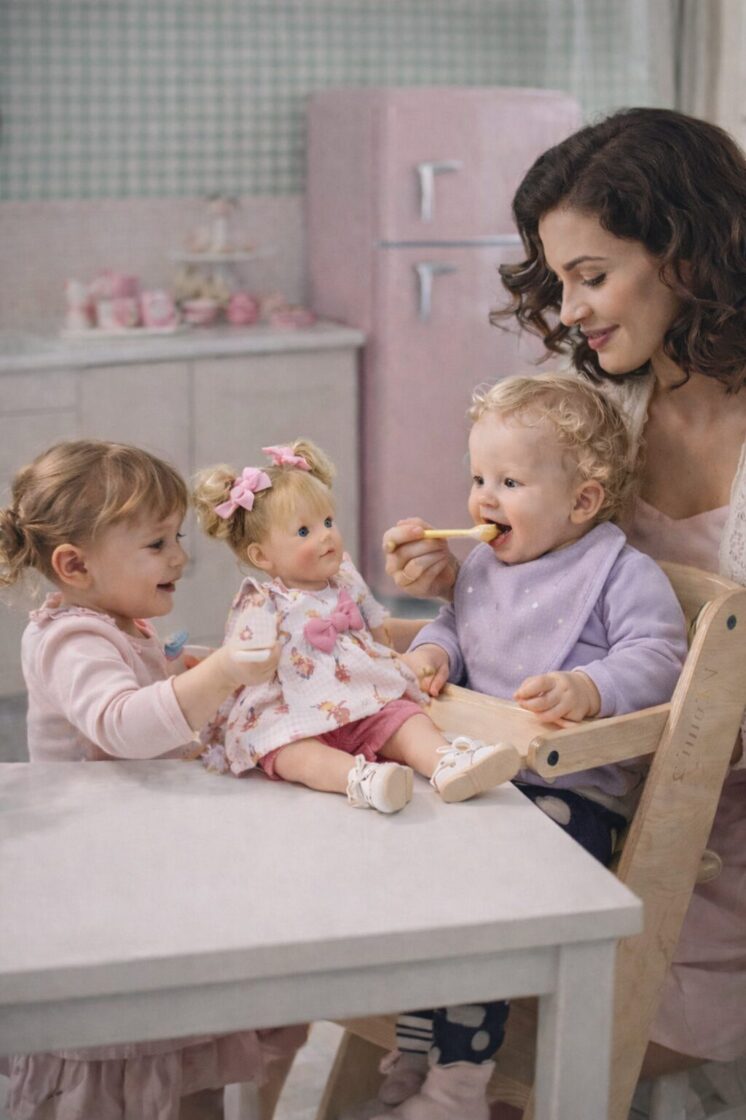
A small child may see themselves in a doll (their “little self”) — especially when they soothe it, feed it, or “put it to sleep.” In those moments, they’re often doing what they themselves want to receive: gentleness, safety, attention, presence. It’s like the child quietly telling themselves: “I deserve care too.”
But just as often, a doll also reflects Mom or Dad — the child repeats what they’ve observed: how mom talks, how she comforts, how she gets angry, how she rushes, how she hugs. And here comes the most beautiful part: the child isn’t only copying — they are trying to understand. A doll lets them “play out” relationships until they become clearer, safer, and more manageable.
💡 That’s why a doll can be:
• the child themselves
• the child’s mom
• the relationship story between them
Care, affection, relationship dynamics, roles, and emotions: through play, a child “trains” empathy, learns to notice another’s needs, comfort, wait, communicate, and be present — even if it all starts with something simple: feeding, tucking in, cuddling, or taking the doll on a “trip.” And it is in this kind of play that a child finds their own path — not as a perfect adult, but as a human being slowly learning how to love, care, and connect with the world.
📚 Study (full link)
“Exploring the Benefits of Doll Play Through Neuroscience” (2020) — a study on how doll play can help develop social-emotional skills, including empathy:
https://pmc.ncbi.nlm.nih.gov/articles/PMC7560494/
Role play with dolls looks simple:
• “eat your porridge”
• “here’s your blanket”
• “don’t be scared”
• “let’s go to the doctor”
• “I’m sorry, I won’t do that again”
But there’s more underneath.
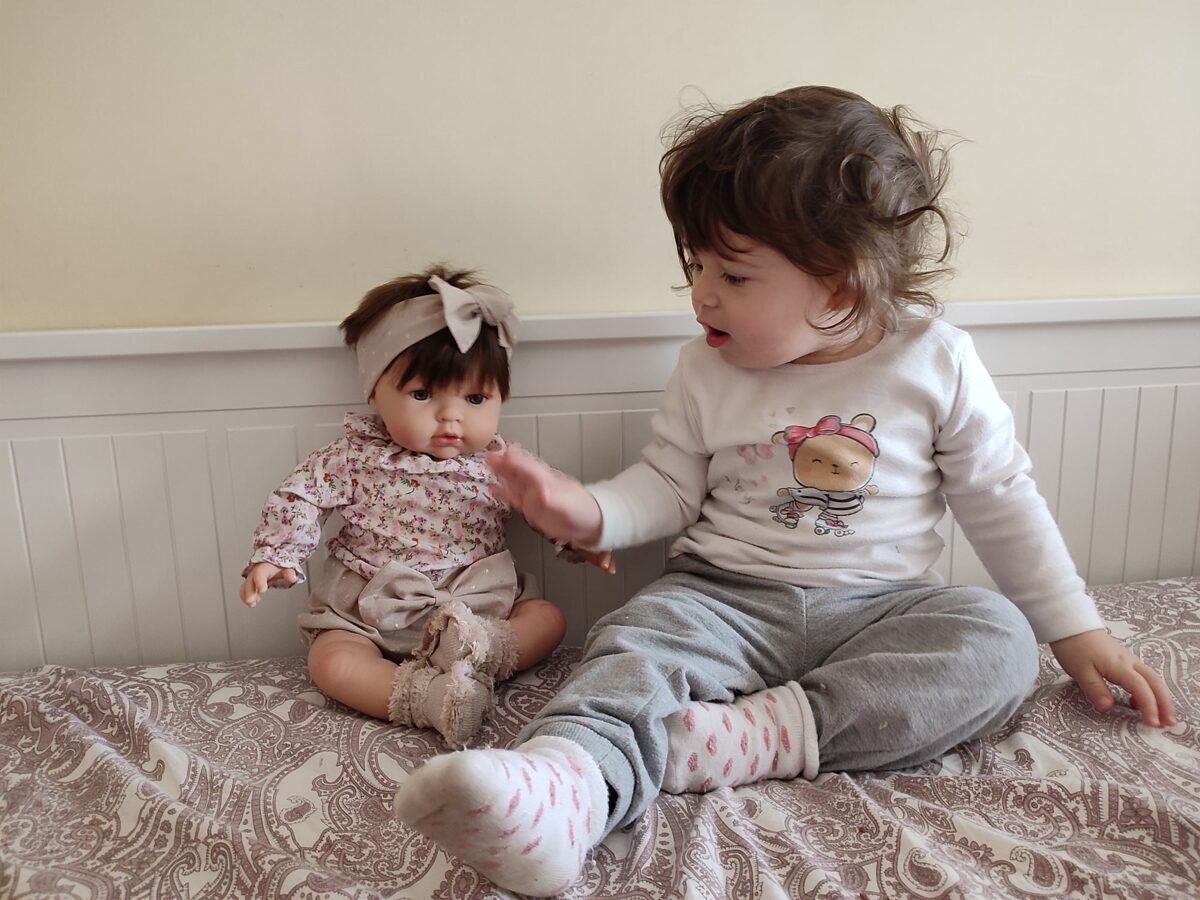
✅ Correlation: role play = emotional skills
The more a child engages in role play, the more they practice:
• empathy (“how does my little one feel?”)
• self-regulation (“I’ll calm them down”)
• responsibility without pressure (“I can take care of someone”)
• acceptance (“they’re crying and that’s okay”)
A doll becomes a “safe training partner” — it won’t get offended, laugh at them, or leave.
And for a child’s brain, it’s a deeply valuable space: I can make mistakes and try again.
But why do children play with dolls less often than before?
Many parents say:
“Dolls were my number one when I was little. Now my child isn’t interested…”
And often, it’s not about a “bad child” or “wrong parenting.”
It’s about how the world has changed:
✅ Correlation #1: more screen time = less free play
Dolls thrive in free play — the kind of play where the child creates the story.
Screens usually deliver the story ready-made.
And then the child is left to… consume, rather than imagine.
✅ Correlation #2: the toy world has become “faster”
Today, there’s more:
• flashing toys
• sounds, buttons, effects
• “instant” entertainment
A doll is quieter. Deeper. And it needs time.
✅ Correlation #3: stereotypes are still alive (even when we don’t want them to be)
Children still hear:
• “that’s for girls”
• “that’s not for boys”
• “that’s for babies”
And this is where our adult role matters most:
to leave the choice to the child.
Because caring is not a “girl skill.”
It’s a human skill.
And now — about adults. Why do so many postpone having children?

This may sound surprising, but:
✅ Correlation: higher expectations for self-fulfillment, financial stability, social status, and lifestyle possibilities (needs, desires) = social pressure + economics + burnout = less courage to become a parent
Adults today often live in a mode of:
• rushing
• overload
• financial worries
• without a strong enough support system
And then the thought of a child doesn’t feel like a “natural next step,” but like:
another massive project that must be done perfectly.
Many people don’t give up on children because they dislike children.
But because they’re not confident they can become the kind of parents they would want for their child — with expectations that feel unrealistically IDEAL.
So how are dolls and “bringing children into the world” connected?
Not directly (“if they play with a doll, they’ll want a child”), but through the inner world.
✅ Correlation: caring role play = a safer attitude toward intimacy and responsibility
When a child plays with a doll, they learn:
• that needs are normal
• that care isn’t a burden — it’s connection and it brings a sense of fulfillment
• that tenderness in relationships is possible
It’s a micro-school of what it means to:
be needed — without losing yourself.
In adulthood, these skills become relationships:
• partnerships
• friendships
• parenthood
• the ability to accept yourself
And here we meet the big concept:
The art of loving, caring, and accepting
For some, it comes naturally.
For others — with time.
For some — painfully, because in childhood there was no example to learn from.
That’s why toys that teach care are not “unimportant.”
They are an essential element of cradle-culture — the foundation of civilization itself.
Role play is not “silliness” — it’s a child’s life training
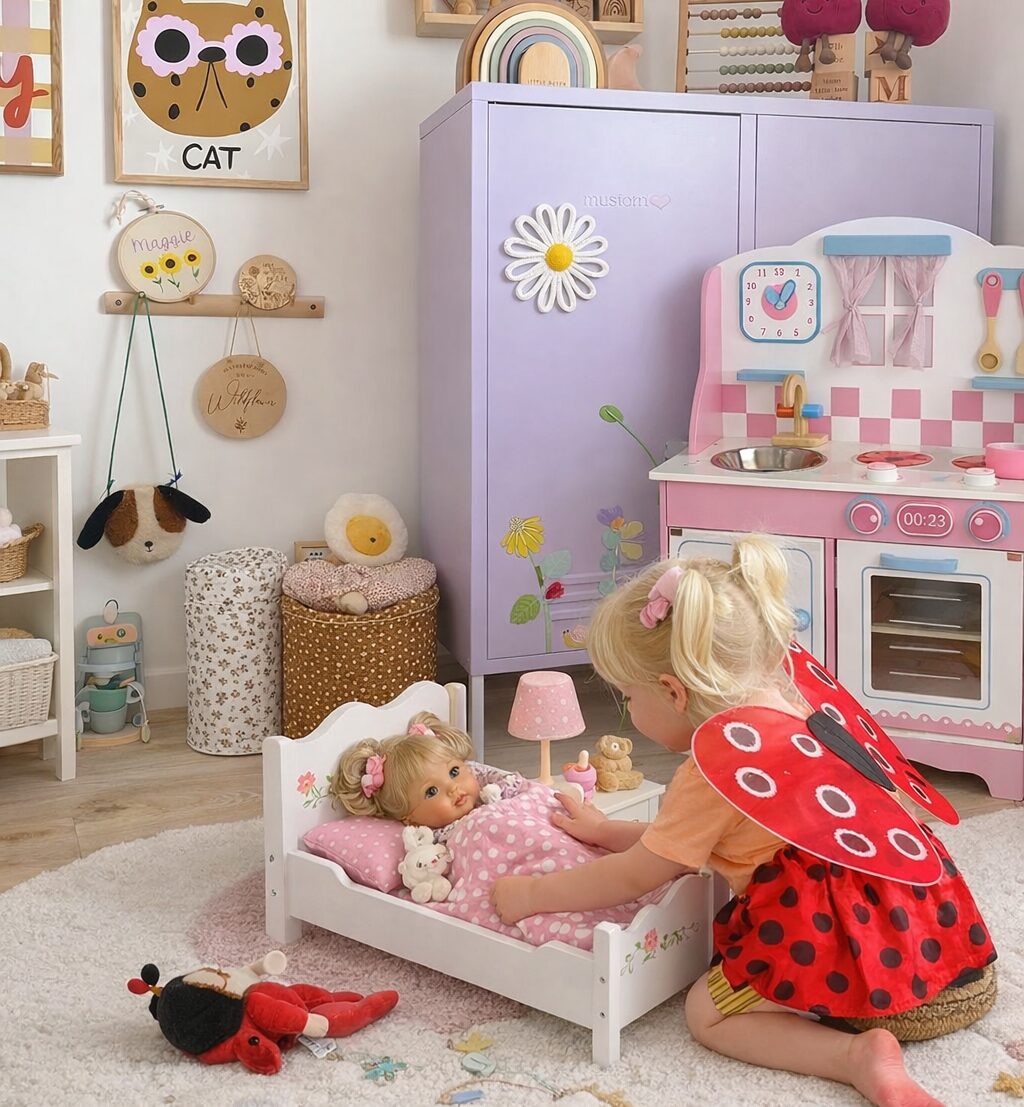
When a child “feeds the doll,” they can practice:
• attention
• language (“open your mouth… like that!”)
• sequence (“first we wash our hands”)
• boundaries (“that’s enough, now it’s bedtime”)
When a child “takes the doll to the doctor,” they may process:
• fear
• uncertainty
• control over the situation
When a child “puts the doll to sleep,” they often do what they wish to receive themselves:
peace, presence, safety.
What do we at KidzKiosk believe about play?
We believe childhood shouldn’t be rushed.
And that play doesn’t have to be loud to be valuable.
Dolls and role play help a child learn:
✅ tenderness without shame
✅ care without the weight of obligation
✅ responsibility as relationship, not control
✅ acceptance — “you’re allowed to have emotions”
And perhaps that’s one of the greatest gifts we can give a child:
not a perfect world, but the ability to stay human inside it.
Practical: how to help a child fall in love with role play (without forcing it)
If the doll is sitting on the shelf at home and “nothing happens,” try this:
1) Start with 2 minutes
“Hi, little doll, what are you going to do today?”
And that’s it. No pressure.
2) Give your child “real-life scenes”
• doctor
• hairdresser
• kindergarten
• travel
• shop
• café
3) Include boys too (if your child is a boy)
Very calmly: “This is your little friend.”
Care = strength.
4) Add accessories
Even a single blanket or a small bag can “open the story.”
5) Let your child be different
Sometimes care looks like a hug.
Sometimes — like a firm voice: “calm down now!”
That’s normal too.
In closing: a small doll, but a very big meaning
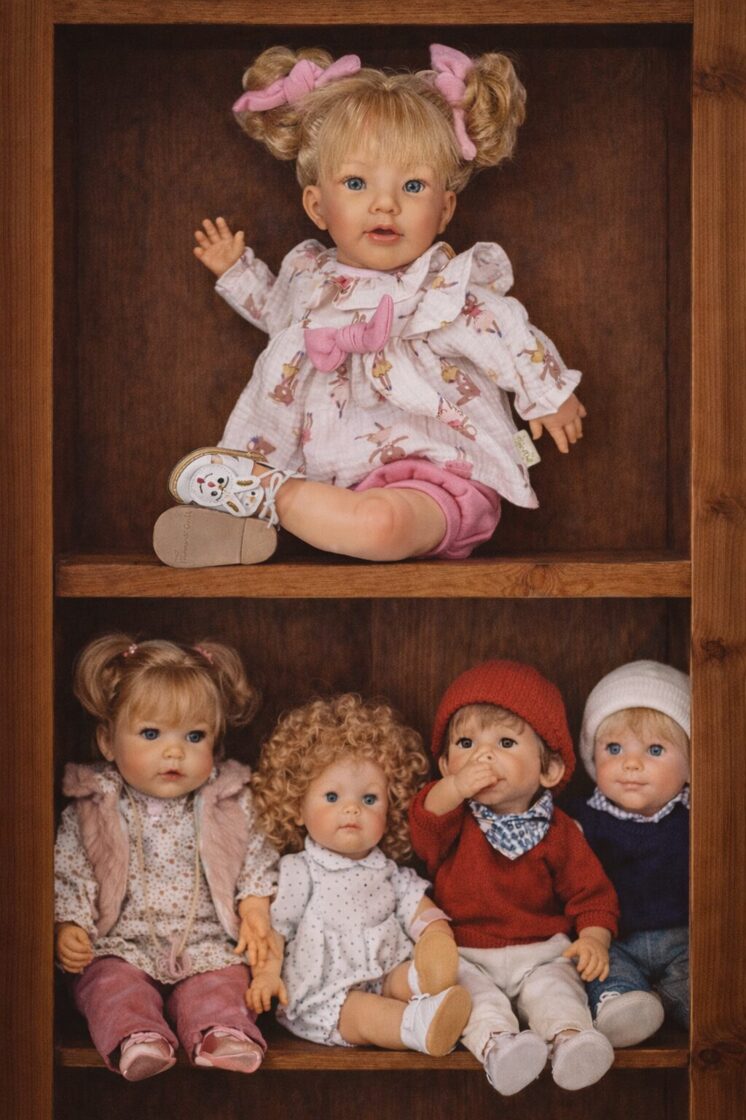
Today the world often teaches us to:
• achieve
• win
• look good
• be productive
But through a doll, a child can learn something else:
to be present.
And presence is what everything else grows from:
love, care, connection, courage…
and sometimes even that moment when an adult says:
“Yes. I can. I will be.”
✨ KidzKiosk recommendation
When choosing a doll or a role-play toy, don’t just think: “Is it the most trendy one?”
Ask instead:
Will it help my child create stories, care, and safety?
Because that’s where the real childhood magic happens. ✨