
Is My Child Ready for Nursery? A Parent’s Guide to Separation, Settling In and Choosing Safe Childcare
“Is 18 months too young for nursery?”
“My child cries whenever I leave. Does that mean they are not ready?”
“My child cries whenever I leave. Does that mean they are not ready?”
“Will nursery help them become independent, or could it damage our bond?”
“The nursery says I should leave quickly and let them cry. Is that normal?”
“How do I know whether the problem is my child’s separation anxiety — or the setting itself?”
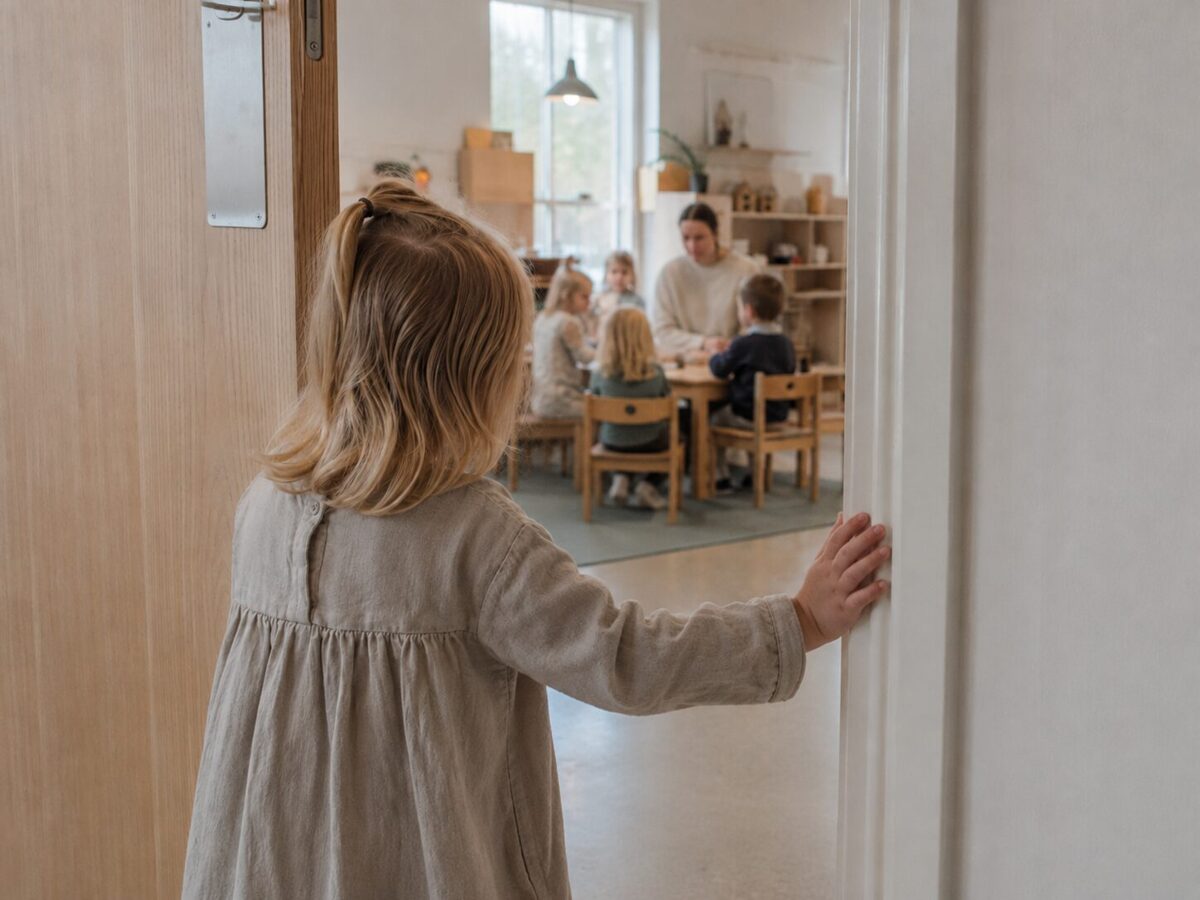
For many parents, starting nursery, preschool, crèche or a childminder is not simply an administrative step. It may be the first time their child will spend several hours away from the people who know them best.
The decision is often made under pressure. Parents may be returning to work, managing rising living costs or accepting the only available childcare place. In Great Britain, childcare access remains uneven, especially for children with special educational needs and disabilities. Coram Family and Childcare’s 2026 survey found that only 45% of responding local authorities reported sufficient early-years childcare across at least three quarters of their area for children with SEND.
This can leave parents feeling that they must make the available setting work, even when something does not feel right.
But a child’s readiness is only half of the question.
The real decision is not simply whether your child is ready to be away from you. It is whether the chosen setting is ready to care for your particular child.
A confident three-year-old may struggle in a noisy, rigid or emotionally distant nursery. A sensitive 20-month-old may gradually flourish in a small setting with a consistent, responsive practitioner.
The child and the environment must be considered together.
Is there a “right age” to start nursery?
There is no single age at which every child becomes ready for non-parental care.
Separation anxiety is especially common between approximately six months and three years. Babies and toddlers may become clingy, cry when a parent leaves or suddenly reject people they previously accepted. The NHS describes this as a normal developmental stage rather than evidence that a child has been badly parented or is insecurely attached.
This means an 18-month-old may protest more strongly than they did at nine months. They now understand that their parent can leave, but they do not yet have an adult understanding of time or a reliable ability to imagine the reunion.
A child may know that Mummy usually comes back without being able to understand what “after lunch” or “at four o’clock” means.
Age still matters, but it is only one part of the picture. Readiness also depends on:
the child’s temperament;
previous experiences of being cared for by other adults;
communication abilities;
sensory needs;
health and sleep;
recent changes in family life;
the length of the childcare day;
the size and noise level of the group;
staff continuity;
the quality of the settling-in process;
whether a particular adult is available to comfort the child.
A child does not become emotionally ready simply because they have reached the age at which funded hours begin or parental leave ends.
What does “ready to separate” actually mean?
Readiness does not mean that a child walks through the door smiling and never looks back.
It means that, with suitable adult support, the child has some capacity to experience separation, recover from the initial distress and gradually form a trusting relationship with another caregiver.
The most useful question is therefore not:
“Will my child cry?”
It is:
“What happens after I leave, and who will help my child feel safe?”
Signs that a child may have the foundations for starting childcare
No child needs to meet every point on a checklist. However, parents can observe whether the child:
can spend a short period with another familiar adult;
sometimes accepts comfort from a parent, grandparent, babysitter or other trusted person;
gradually returns to play or exploration after becoming upset;
shows curiosity about new people, rooms or children, even if they first observe from a distance;
can communicate basic needs through words, sounds, pointing, gestures or behaviour;
benefits from a reasonably predictable routine;
explores away from the parent and returns for reassurance;
can tolerate small changes when supported by a calm adult;
reconnects with the parent after a short separation;
can express displeasure, fear and sadness rather than always becoming silent and unreachable.
Temperament matters enormously. Some children enter a room and immediately investigate everything. Others need to sit beside a trusted adult and watch for half an hour before moving.
A child who takes time to warm up is not less capable or less sociable. They may simply require a slower introduction and more predictability.
What does a child not need to do before starting?
A child does not have to:
speak in full sentences;
be completely toilet trained;
dress independently;
share every toy without protest;
sit still for long periods;
eat every food offered;
sleep on command;
play cooperatively with other children;
separate without tears.
These abilities may make the practical day easier, but they are not reliable tests of emotional readiness.
A chatty, toilet-trained child may still feel frightened and overwhelmed. A minimally verbal child who cries at drop-off may form a warm and secure relationship with a practitioner and settle successfully.
“School readiness” and “readiness for separation” are not the same thing.
When might a child need a gentler arrangement?
A child may benefit from shorter sessions, a childminder, a smaller group, a parent-supported settling period or a delayed start when:
they have never previously stayed with another adult;
they are unable to accept comfort from anyone except one parent;
the family has recently experienced separation, bereavement, illness or a house move;
a new sibling has recently arrived;
the child is recovering from hospital treatment or another frightening experience;
they are highly sensitive to noise, touch, crowds or unpredictable movement;
they have communication differences that staff do not yet understand;
they are autistic, have developmental differences or require additional support;
sleep is already severely disrupted;
the proposed childcare day is much longer than any separation the child has experienced;
the child shows intense panic rather than ordinary protest.
This does not mean the child has failed.
Sometimes “not ready” really means:
“This transition is too fast, this day is too long, or this environment asks more than the child can currently manage.”
My child cries at drop-off. Am I causing trauma?
Crying is not, by itself, evidence of psychological trauma.
A young child may cry because they are:
objecting to the separation;
frightened by an unfamiliar person;
unsure what will happen next;
tired or hungry;
overwhelmed by noise;
missing their parent;
unable to express the problem in another way.
Securely attached children can cry very intensely when their parent leaves. Separation anxiety can actually reflect the importance of the relationship, not damage within it. The NHS advises that leaving a child with another caregiver does not automatically harm them and that gradual experiences of separation can support developing independence.
The more important questions are:
How long does the distress continue?
Can a familiar practitioner comfort the child?
Does the child begin watching, playing or exploring?
Does the intensity slowly reduce across days or weeks?
Is the child eating, drinking and resting?
Is the child developing a relationship with at least one adult?
Does the setting respond to the distress or merely wait for the child to become quiet?
What happens at home afterwards?
One difficult morning is not the same as repeated, unsupported distress.
When crying may be part of an ordinary settling-in process
A child may cry at the door but then:
accept a cuddle from their key person;
hold a comfort object;
watch the other children;
begin playing after a short period;
eat at least a little;
seek help from an adult;
show moments of enjoyment;
become upset again at transitions but recover;
need more closeness at home without losing interest in normal activities.
Progress is not always linear. A child may appear settled for a week and then struggle again after illness, a weekend, staff absence or a change of room.
The important sign is not perfect happiness. It is an emerging ability to recover with support.
A quiet child is not always a settled child
English-speaking childcare culture often rewards the child who is described as:
“good as gold”;
“no trouble at all”;
“so independent”;
“quiet and easy”;
“happy to get on with things”.
Sometimes that child genuinely feels secure.
But some children respond to stress by becoming unusually still, compliant or withdrawn. They may not scream or cling. They may stop asking for anything.
Look more closely if a child:
sits in one place for long periods;
rarely plays or explores;
avoids eye contact with adults;
does not seek comfort when hurt or frightened;
eats or drinks very little;
appears blank or unusually passive;
complies with every instruction but shows little enjoyment;
has intense meltdowns immediately after collection;
begins waking at night;
develops frequent tummy aches;
becomes extremely clingy at home;
loses previously established skills;
starts fearing a particular adult, room or routine.
The NHS advises parents to seek support when anxiety persists, worsens or begins interfering with home, nursery or social life. Signs may include sleep disturbance, changes in eating, irritability, clinginess, physical complaints and difficulty concentrating.
Silence is not proof of emotional regulation. Sometimes it is simply the absence of visible protest.
Does nursery damage attachment?
The statement “nursery damages attachment” is too broad to be scientifically accurate.
Equally, “nursery is always beneficial” is also too broad.
Research repeatedly shows that outcomes depend on the quality and stability of care, the child’s circumstances, family relationships and the type of provision.
A 2024 individual-participant meta-analysis brought together six birth cohorts from Britain, Denmark, France, the Netherlands and Spain. It included more than 87,000 parent–child pairs. Children who had attended centre-based childcare showed slightly lower levels of later internalising symptoms — such as anxiety and withdrawal — than children cared for exclusively by parents. The researchers found no overall association between centre-based care and later externalising difficulties, although they cautioned that the data reflected childcare arrangements from earlier decades and could not answer every question about starting age, hours or present-day quality.
A separate 2025 meta-analysis combined 31 publications from 16 longitudinal studies involving 17,913 children. It found that the quality of everyday interactions in early childhood education and care was a small but stable predictor of children’s later social and emotional development, with associations extending into adolescence.
This matters because “quality” is not merely the building, curriculum or number of activities advertised.
Process quality means what actually happens between adults and children:
whether adults notice children’s signals;
whether comfort is available;
whether staff speak warmly;
whether children are humiliated or respected;
whether practitioners know individual routines;
whether conflict is supported rather than punished;
whether staff are emotionally available;
whether relationships remain stable.
A nursery may look beautiful in photographs and still provide poor process quality.
What about research suggesting risks?
Research is not completely uniform, and parents deserve honesty about that.
A small German longitudinal study published in 2026 followed 225 families into the children’s early twenties. It reported associations between early non-familial care and several later outcomes, including some risk behaviours, while an earlier starting age was weakly associated with more mental-health difficulties. However, this was an observational study drawn from one German city, based on care arrangements from an earlier period. It cannot establish that childcare caused those later outcomes, and its findings sit within a much larger body of mixed evidence. The study itself emphasised care quality, starting age and family context rather than claiming that all non-parental care is harmful.
This is why confident social-media statements such as “science proves nursery before three causes trauma” should be treated cautiously.
Research can identify patterns across groups. It cannot determine, from age alone, whether one particular child will thrive in one particular setting.
Four arguments parents hear — and what is missing from them
“Children need nursery for socialisation”
Children can benefit from familiar peers, group play, language-rich interactions and relationships with other safe adults. Parents in Coram’s 2026 focus groups frequently mentioned friendship, confidence, independence and language as benefits of childcare.
But nursery is not the only way to develop socially.
Young children also learn through parents, siblings, grandparents, friends, playgroups, parks, libraries and community activities. A one-year-old does not require a large group for eight hours a day to avoid becoming antisocial.
The relevant question is not whether social contact is good. It is whether the quantity, group size and quality of contact suit the child.
“They must learn to be independent”
Healthy independence does not begin with discovering that nobody responds.
It develops when a child repeatedly experiences:
“I can explore because help is available.”
A child who seeks reassurance is not failing at independence. Returning to a trusted adult is part of how young children regulate themselves before they can regulate themselves alone.
“The longer you stay, the worse you make it”
Some children do become more distressed when goodbyes are prolonged and uncertain. A clear, warm departure can be easier than repeatedly leaving and returning.
But this does not justify a universal rule that every parent must hand over a screaming child at the door on day one.
In Ireland, Tusla’s current settling-in guidance states that parents should be welcomed into services, supported if they wish to stay during settling in, and helped to withdraw gradually over a flexible timeframe. It also expects services to explain how distressed children will be comforted and how parents will be informed.
The correct length of a goodbye is an individual question. The existence of emotional support after the goodbye is not optional.
“They all cry. They eventually stop”
Most children do eventually become quiet.
But quiet can mean different things:
the child has accepted comfort;
the child has become interested in play;
the child has learned the routine;
the child is exhausted;
the child has frozen;
the child has stopped expecting a response.
Ask what happened between the crying and the silence.
Choosing a nursery, preschool, crèche or childminder
Parents often spend months assessing whether their child is ready. The provider should be assessed just as carefully.
1. Check registration and inspection history
Childcare law is not identical across Europe or even across the United Kingdom.
In England, registered early-years provision is governed by the Early Years Foundation Stage framework and inspected by Ofsted. Scotland uses the Care Inspectorate. Registered childcare in Wales is overseen by Care Inspectorate Wales. In Northern Ireland, registration and inspection are carried out through Health and Social Care Trust early-years teams. In the Republic of Ireland, registered early-learning and care services are regulated and inspected by Tusla.
English-speaking families using childcare elsewhere in Europe should identify the relevant national or regional regulator rather than assuming that familiar UK or Irish terms carry the same legal meaning.
Ask:
Is the provider required to be registered?
What is the registration number?
When was the most recent inspection?
Were concerns identified?
What action was taken?
Is the inspection report publicly available?
Who receives complaints that cannot be resolved internally?
Does the provider have appropriate safeguarding and staff-vetting procedures?
A registration certificate proves that a service has entered the regulatory system. It does not prove that it is the right emotional environment for every child.
2. Find out who will become your child’s person
Young children do not attach to a nursery brand. They form relationships with particular people.
Ask:
Who will greet my child?
Who will comfort them?
Who will change or toilet them?
Who will help them sleep?
Who will notice if they withdraw?
Who will tell me about their day?
How many days a week is that person present?
What happens when they are absent?
How often do staff leave?
In England, the EYFS requires every child to be assigned a key person. That person’s role includes tailoring care to the child’s individual needs, helping the child become familiar with the setting and offering a settled relationship. Providers must tell parents who the key person is.
A key-person system should be more than a name printed on a noticeboard.
Warning signs include:
staff cannot explain who is responsible for the child;
the named person rarely works the child’s hours;
several adults assume somebody else will comfort them;
high staff turnover is dismissed as unimportant;
children are repeatedly moved between rooms for operational convenience.
Continuity matters because trust requires repeated experience with the same people.
3. Ask for the actual settling-in plan
Do not accept only “We offer settling-in sessions.”
Ask what this means in practice:
How many visits are offered?
Can the parent stay?
Can the child visit with no expectation of separation?
Can the first unattended session be 20 or 30 minutes?
Can hours increase according to the child’s response?
What happens if the standard plan does not work?
Can the settling process pause after illness?
Can the child bring a comfort object?
Will the same practitioner be present?
How will staff decide whether the child is coping?
Ireland’s 2025 guidance treats settling in as an ongoing process rather than a single event. It highlights parent involvement, consistent relationships, individual routines, familiar objects, careful communication and gradual withdrawal where needed.
A rigid settling policy may be administratively convenient while being developmentally unsuitable.
4. Observe how adults respond to emotions
The most revealing moment during a nursery visit may not be a planned activity. It may be what happens when a child cries, refuses, spills something or becomes angry.
Listen for the difference between:
“You’re missing Dad. Come and sit with me.”
and:
“There is no need to cry. You’re a big boy now.”
Watch whether adults:
move physically closer to distressed children;
speak calmly;
help children name feelings;
allow children to observe before joining;
accept that children may need repeated reassurance;
use humour without ridicule;
protect children’s dignity;
respond differently according to individual needs.
Be cautious if distress is routinely described as:
attention seeking;
manipulation;
naughtiness;
weakness;
bad behaviour;
overattachment;
a parent’s fault.
A toddler’s behaviour is communication before it is a moral choice.
5. Ask about food, sleep, toileting and bodily autonomy
Many adults’ strongest early-years memories are not about phonics or craft activities. They are about being forced to eat, lying awake during compulsory naps, being denied the toilet or being shamed after an accident.
Ask directly:
Must children finish everything on the plate?
What happens if a child dislikes the meal?
Is food ever used as a reward or punishment?
Are children pressured, restrained or distracted into eating?
What happens if a child does not sleep?
Can a non-sleeping child rest quietly?
Are children required to lie still for a fixed period?
How are toileting accidents handled?
Is privacy protected?
Must children ask repeatedly before using the toilet?
How does the setting respond when a child says “no” to touch?
Routine is necessary in group care. Humiliation and forced compliance are not.
The purpose of mealtimes, sleep and toileting should be care — not testing whether a child obeys.
6. Look beyond the advertised adult-to-child ratio
Legal ratios matter, but they do not tell the whole story.
Ask how staffing works:
at opening time;
at collection time;
during staff breaks;
when someone is ill;
while nappies are changed;
during outdoor play;
during sleep;
when one child requires sustained comfort;
when staff are completing paperwork.
In England, providers must ensure staffing arrangements meet children’s needs, adequately supervise them and tell parents how staffing is organised.
A setting may technically meet the minimum ratio while no adult is emotionally available to a distressed child.
The practical question is:
When several children need help at once, is there realistically someone available for mine?
7. Consider SEND, sensory needs and language
A child may appear “not ready” when the environment is failing to understand them.
Ask whether staff can support:
autism and sensory differences;
speech or language delay;
mobility or medical needs;
hearing differences;
children who communicate non-verbally;
children learning English as an additional language;
children whose home language is not spoken by staff;
children who require a quieter space;
children who need visual routines.
In England, the EYFS requires arrangements to support children with SEND. Ireland’s settling-in guidance also recognises that children with additional needs, children learning English and children experiencing disadvantage may require extra transition support.
“Treating every child exactly the same” is not inclusion.
Equal dignity may require different support.
8. Assess how the setting communicates with parents
“Fine” is not a meaningful daily report.
Parents should be able to find out:
how long the child was distressed;
who comforted them;
what helped;
whether they played;
whether they ate and drank;
whether they slept;
whether they sought adult contact;
what was difficult;
whether the situation is improving.
In England, registered providers must maintain a two-way flow of information with parents, provide information about routines, staffing and policies, and operate a written complaints procedure. Written complaints concerning EYFS requirements must be investigated, with the outcome communicated within 28 days.
A setting should not promise minute-by-minute messages throughout the day. Staff need to care for children rather than continuously update an app.
But “trust us and do not ask questions” is not a healthy partnership.
The “good child” culture: red flags hidden in ordinary phrases
Not every harmful practice looks dramatic.
Some childcare cultures are shaped by older beliefs that a good child is quiet, obedient, undemanding and easy for adults to manage. These attitudes are not limited to one country or generation. They may appear in private nurseries, state provision, childminding and family care.
Listen carefully when adults say:
“We do not make exceptions”
Children need boundaries, but identical treatment is not always fair or developmentally appropriate.
One child may need a visual timetable. Another may need a shorter day. Another may need more movement, a comfort toy or a quieter lunch table.
“He knows exactly what he is doing”
A two-year-old can learn that crying brings a parent closer. That does not mean the child is operating a calculated scheme to control adults.
The behaviour still communicates a real need, fear or limit.
“She needs toughening up”
Resilience does not develop through repeated humiliation or abandonment.
It develops through manageable challenge combined with support and recovery.
“We cannot cuddle every child”
No practitioner can hold one child all day while caring for a group.
But a service accepting babies and toddlers should have a realistic answer to the question of how distressed children receive comfort.
“Children must learn that adults are in charge”
Adults are responsible for safety and boundaries.
That does not mean children should learn unquestioning obedience to every adult. A child must be allowed to communicate:
“That hurts.”
“I am frightened.”
“I need the toilet.”
“Do not touch me.”
“I do not understand.”
“I want my parent.”
“I do not want any more food.”
A child taught that adults must always be obeyed may become easier to manage while also becoming less likely to report inappropriate behaviour.
“Parents make settling worse”
Some parental behaviour can unintentionally increase uncertainty. Repeatedly disappearing without saying goodbye, returning several times or showing visible panic may make separation harder.
But partnership with parents is not the enemy of professional care. A provider that regards all parental questions as interference may be protecting its convenience rather than the child’s wellbeing.
Twenty questions to ask before accepting a place
What does your settling-in process look like in practice?
Can I initially stay with my child?
Can we begin with very short sessions?
How will you decide when to increase the hours?
Who will be my child’s key person?
How often is that person present?
What happens when the key person is absent?
What do you do when a child continues crying?
How do you know when a child has truly settled?
Will you tell me honestly how long my child was distressed?
How do you respond when a child refuses food?
What happens when a child does not sleep?
How are toileting accidents handled?
What discipline or behaviour-management methods do you use?
How do you support children who become overwhelmed by noise?
How do you support SEND, additional learning needs and communication differences?
How high is staff turnover?
Where can I read the latest inspection report?
What is the complaints procedure?
When will we review whether the placement is working?
Do not assess only the answers.
Notice how staff react to being asked.
A confident, child-centred setting should be able to discuss difficult scenarios without becoming dismissive or defensive.
Three realistic settling-in examples
These examples are composites, not diagnoses of individual children.
Ava, 19 months
Ava cries when her father leaves. Her key person holds her, acknowledges that she misses him and looks at a family photograph with her. After ten minutes, Ava watches the other children. Later she pushes a toy pram and eats some fruit. At home, she wants more cuddles and wakes once during the night.
This looks more like a demanding but supported transition than psychological trauma. Ava protests, accepts help and gradually reconnects with the environment.
Noah, two years and eight months
Noah screams during every journey to nursery. After his parent leaves, he sits beside the door for hours. He does not eat, drink or play and refuses all contact. At home, he wakes screaming, hits his head and panics when his coat is put on.
After five weeks, staff continue to say, “He will get used to it. You must not give in.”
This situation requires reassessment. Possible responses include shortening the day, changing the settling plan, identifying a consistent practitioner, investigating sensory or developmental needs, consulting a health professional or considering another setting.
Continuing unchanged is not the only legitimate option.
Sophie, three years
Sophie separates without tears and staff describe her as wonderfully behaved. At home, however, she begins having explosive meltdowns, refuses the toilet and repeatedly plays a game in which dolls are forced to lie still and punished for moving.
Her parents learn that all children must remain on their beds during a long sleep period, even if they do not sleep, and that toileting accidents are discussed publicly.
The problem is not Sophie’s failure to separate. It is the way routines are enforced.
What might harmful childcare affect in the long term?
Ordinary separation supported by responsive adults is not the same as abandonment, severe neglect or institutional deprivation.
Parents should be careful with online content that takes research about orphanages, prolonged family separation or serious neglect and presents it as evidence that an ordinary nursery day inevitably causes the same harm.
Those are fundamentally different experiences.
However, repeated care in which a child is frightened, humiliated, ignored or unable to form a stable relationship can matter.
Over time, a child may begin to learn:
my distress annoys adults;
asking for help is pointless;
good children do not have needs;
adults may touch or control my body regardless of what I say;
mistakes lead to shame;
authority must not be questioned;
I am accepted when I am quiet and convenient;
my “no” has no value.
Later difficulties cannot usually be traced to one nursery incident. Development is shaped by many relationships, experiences and protective factors.
Children are also capable of significant recovery when adults recognise what is happening, respond consistently and restore a sense of safety.
The aim is not to frighten parents into believing that every tear leaves permanent damage. It is to prevent genuine warning signs from being dismissed as ordinary settling.
When should parents seek professional advice?
Speak to a health visitor, GP, paediatrician, child psychologist or another appropriate professional when:
distress remains extreme for several weeks;
symptoms are becoming worse rather than better;
the child remains upset for a long period after the parent leaves;
eating or drinking is significantly affected;
sleep becomes persistently disrupted;
the child develops repeated physical complaints;
there is a marked and lasting loss of skills;
the child becomes unusually withdrawn or unreachable;
self-injury appears;
aggression becomes severe;
the child shows intense fear of a particular adult;
there are concerns about neglect, humiliation or abuse;
the provider refuses to communicate or review the plan.
The NHS specifically recommends seeking help when a young child remains very distressed after separation or when the difficulty continues for more than a few weeks.
Parents do not need courtroom-level proof before asking questions or changing an arrangement.
A persistent concern is enough reason to look more closely.
A final checklist
Your child may be developing readiness when:
they can sometimes accept care from another trusted person;
they can be comforted after becoming upset;
they communicate basic needs in some form;
they gradually return to play;
they show curiosity about the environment;
their stress reduces with familiarity;
they form a relationship with a practitioner;
home behaviour remains broadly manageable.
The setting may be suitable when:
a consistent adult takes responsibility for the relationship;
settling in is gradual and flexible;
parents are treated as partners;
staff respond to distress rather than merely suppressing it;
children’s bodies, appetite, sleep and privacy are respected;
individual needs are accommodated;
communication is honest;
staffing is stable enough for relationships to form;
safeguarding and complaints procedures are clear;
the setting is prepared to change the plan when a child is struggling.
The most important thing to remember
Nursery is not automatically traumatic.
Crying is not automatically evidence of harm.
Remaining silent is not automatically evidence that a child is fine.
And reaching a particular birthday does not automatically make a child ready for a long day in group care.
A healthy transition does not teach a child that they must stop needing their parent.
It teaches them something more valuable:
“My parent leaves and comes back. While they are away, there is another safe person who knows me, notices me and helps me. I am allowed to have feelings, and I do not have to face them alone.”
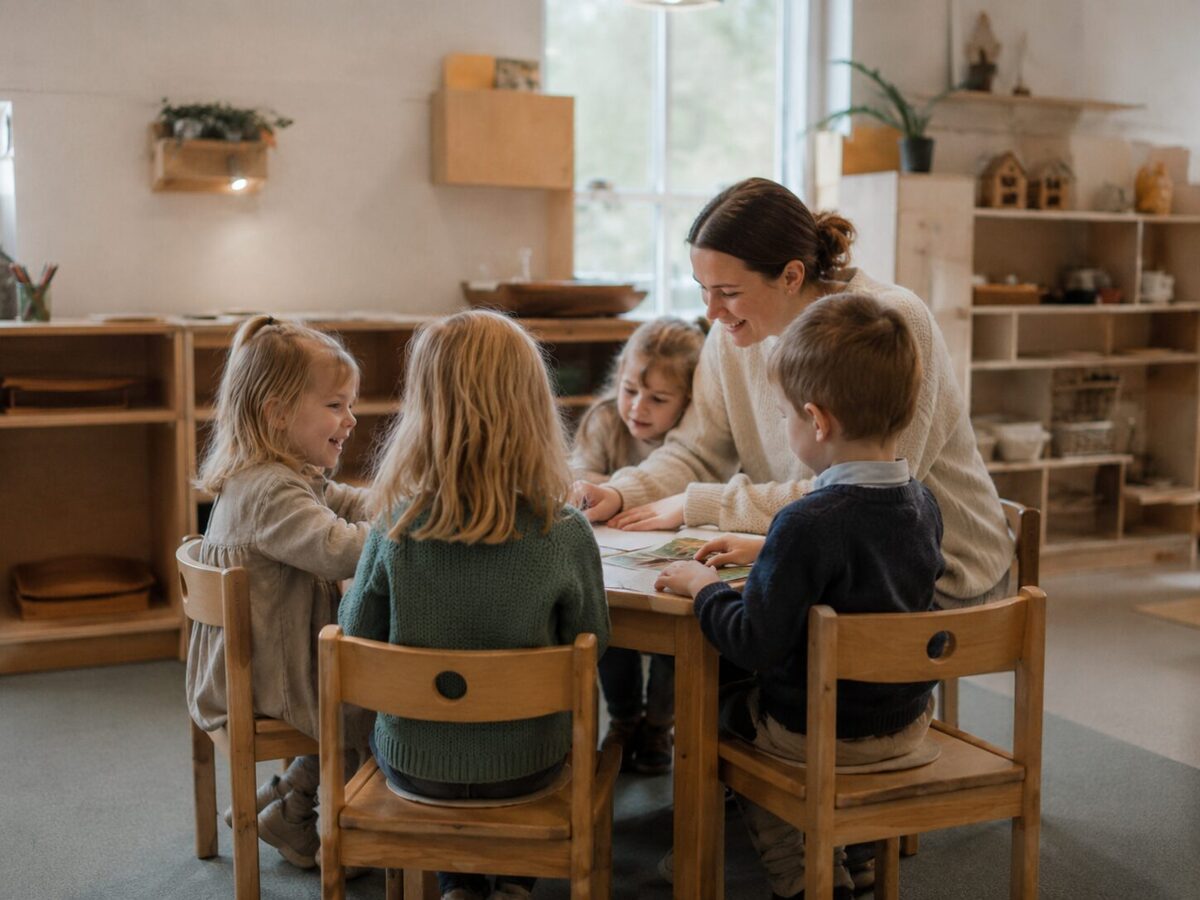
That is the foundation of real independence.
When a Doll Becomes a Child’s First School of Love
The correlations between role play, care… and why adults sometimes postpone having children
There are topics that feel so everyday that we barely talk about them.
For example — dolls. For some, they’re “just a toy,” for others — a symbol of childhood. But in truth… a doll is often a child’s first safe “life school” practice partner — a way to try out what they still can’t fully put into words:
to love, to care, to accept, to soothe, to be present — and that’s not only sweet… it’s the essence of life.
And that brings us to a bigger reflection — why we increasingly hear people say:
“I’m not ready for kids yet.”
“I don’t think I want them at all.”
This is not an article about what’s “right” or “wrong.”
This is an article about correlations — about the connection between children’s role play, emotional learning, and adult choices.
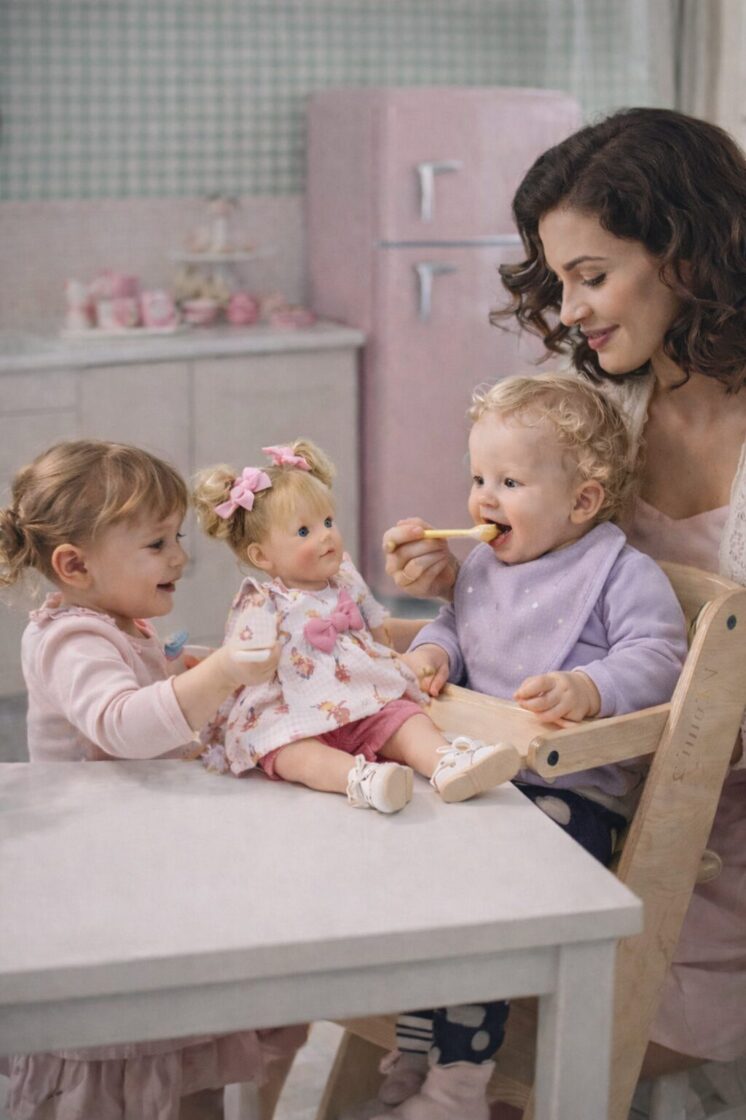
Because sometimes, the answers to big life are hidden in small games.
A doll is not just a doll — it’s a reflection of a mini world where a child learns life safely
A small child may see themselves in a doll (their “little self”) — especially when they soothe it, feed it, or “put it to sleep.” In those moments, they’re often doing what they themselves want to receive: gentleness, safety, attention, presence. It’s like the child quietly telling themselves: “I deserve care too.”
But just as often, a doll also reflects Mom or Dad — the child repeats what they’ve observed: how mom talks, how she comforts, how she gets angry, how she rushes, how she hugs. And here comes the most beautiful part: the child isn’t only copying — they are trying to understand. A doll lets them “play out” relationships until they become clearer, safer, and more manageable.
💡 That’s why a doll can be:
• the child themselves
• the child’s mom
• the relationship story between them
Care, affection, relationship dynamics, roles, and emotions: through play, a child “trains” empathy, learns to notice another’s needs, comfort, wait, communicate, and be present — even if it all starts with something simple: feeding, tucking in, cuddling, or taking the doll on a “trip.” And it is in this kind of play that a child finds their own path — not as a perfect adult, but as a human being slowly learning how to love, care, and connect with the world.
📚 Study (full link)
“Exploring the Benefits of Doll Play Through Neuroscience” (2020) — a study on how doll play can help develop social-emotional skills, including empathy:
https://pmc.ncbi.nlm.nih.gov/articles/PMC7560494/
Role play with dolls looks simple:
• “eat your porridge”
• “here’s your blanket”
• “don’t be scared”
• “let’s go to the doctor”
• “I’m sorry, I won’t do that again”
But there’s more underneath.
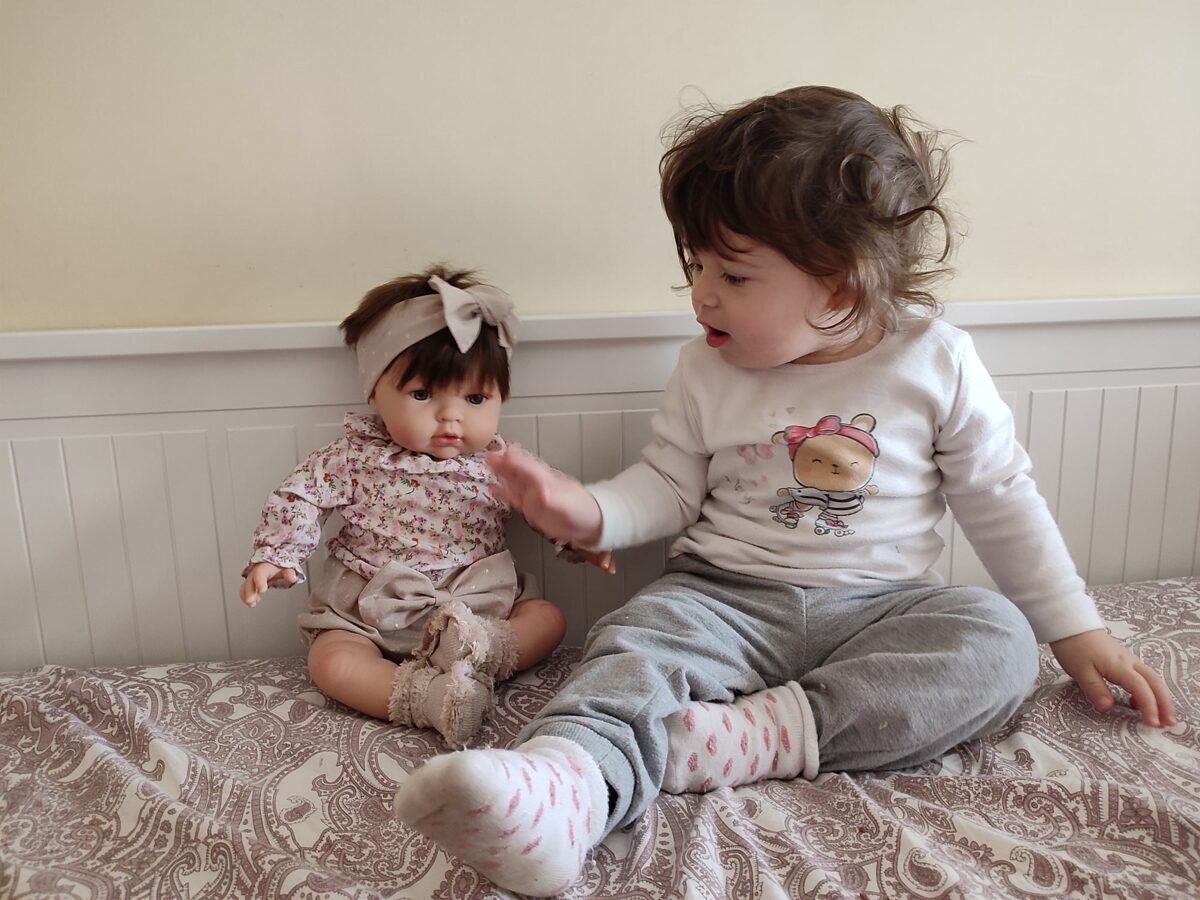
✅ Correlation: role play = emotional skills
The more a child engages in role play, the more they practice:
• empathy (“how does my little one feel?”)
• self-regulation (“I’ll calm them down”)
• responsibility without pressure (“I can take care of someone”)
• acceptance (“they’re crying and that’s okay”)
A doll becomes a “safe training partner” — it won’t get offended, laugh at them, or leave.
And for a child’s brain, it’s a deeply valuable space: I can make mistakes and try again.
But why do children play with dolls less often than before?
Many parents say:
“Dolls were my number one when I was little. Now my child isn’t interested…”
And often, it’s not about a “bad child” or “wrong parenting.”
It’s about how the world has changed:
✅ Correlation #1: more screen time = less free play
Dolls thrive in free play — the kind of play where the child creates the story.
Screens usually deliver the story ready-made.
And then the child is left to… consume, rather than imagine.
✅ Correlation #2: the toy world has become “faster”
Today, there’s more:
• flashing toys
• sounds, buttons, effects
• “instant” entertainment
A doll is quieter. Deeper. And it needs time.
✅ Correlation #3: stereotypes are still alive (even when we don’t want them to be)
Children still hear:
• “that’s for girls”
• “that’s not for boys”
• “that’s for babies”
And this is where our adult role matters most:
to leave the choice to the child.
Because caring is not a “girl skill.”
It’s a human skill.
And now — about adults. Why do so many postpone having children?

This may sound surprising, but:
✅ Correlation: higher expectations for self-fulfillment, financial stability, social status, and lifestyle possibilities (needs, desires) = social pressure + economics + burnout = less courage to become a parent
Adults today often live in a mode of:
• rushing
• overload
• financial worries
• without a strong enough support system
And then the thought of a child doesn’t feel like a “natural next step,” but like:
another massive project that must be done perfectly.
Many people don’t give up on children because they dislike children.
But because they’re not confident they can become the kind of parents they would want for their child — with expectations that feel unrealistically IDEAL.
So how are dolls and “bringing children into the world” connected?
Not directly (“if they play with a doll, they’ll want a child”), but through the inner world.
✅ Correlation: caring role play = a safer attitude toward intimacy and responsibility
When a child plays with a doll, they learn:
• that needs are normal
• that care isn’t a burden — it’s connection and it brings a sense of fulfillment
• that tenderness in relationships is possible
It’s a micro-school of what it means to:
be needed — without losing yourself.
In adulthood, these skills become relationships:
• partnerships
• friendships
• parenthood
• the ability to accept yourself
And here we meet the big concept:
The art of loving, caring, and accepting
For some, it comes naturally.
For others — with time.
For some — painfully, because in childhood there was no example to learn from.
That’s why toys that teach care are not “unimportant.”
They are an essential element of cradle-culture — the foundation of civilization itself.
Role play is not “silliness” — it’s a child’s life training
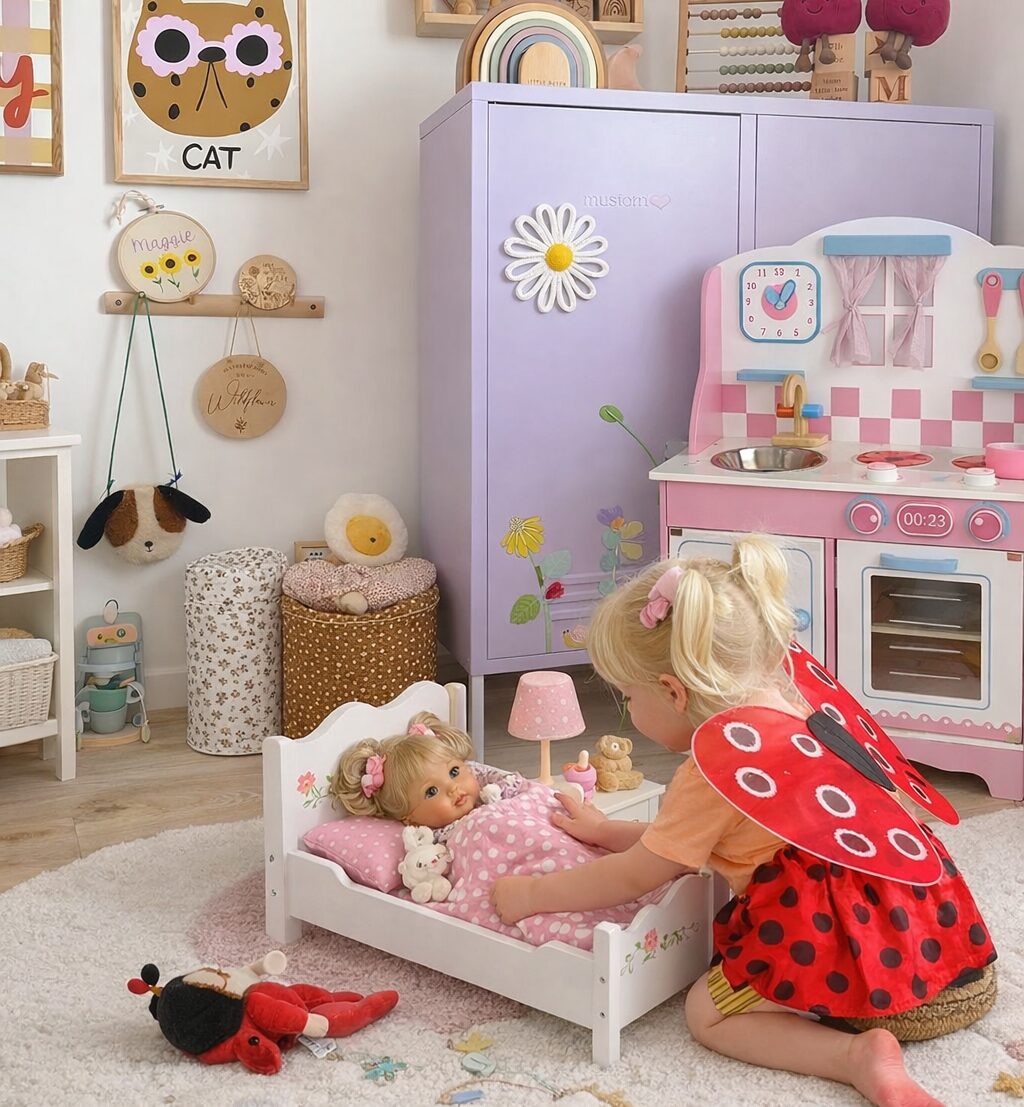
When a child “feeds the doll,” they can practice:
• attention
• language (“open your mouth… like that!”)
• sequence (“first we wash our hands”)
• boundaries (“that’s enough, now it’s bedtime”)
When a child “takes the doll to the doctor,” they may process:
• fear
• uncertainty
• control over the situation
When a child “puts the doll to sleep,” they often do what they wish to receive themselves:
peace, presence, safety.
What do we at KidzKiosk believe about play?
We believe childhood shouldn’t be rushed.
And that play doesn’t have to be loud to be valuable.
Dolls and role play help a child learn:
✅ tenderness without shame
✅ care without the weight of obligation
✅ responsibility as relationship, not control
✅ acceptance — “you’re allowed to have emotions”
And perhaps that’s one of the greatest gifts we can give a child:
not a perfect world, but the ability to stay human inside it.
Practical: how to help a child fall in love with role play (without forcing it)
If the doll is sitting on the shelf at home and “nothing happens,” try this:
1) Start with 2 minutes
“Hi, little doll, what are you going to do today?”
And that’s it. No pressure.
2) Give your child “real-life scenes”
• doctor
• hairdresser
• kindergarten
• travel
• shop
• café
3) Include boys too (if your child is a boy)
Very calmly: “This is your little friend.”
Care = strength.
4) Add accessories
Even a single blanket or a small bag can “open the story.”
5) Let your child be different
Sometimes care looks like a hug.
Sometimes — like a firm voice: “calm down now!”
That’s normal too.
In closing: a small doll, but a very big meaning
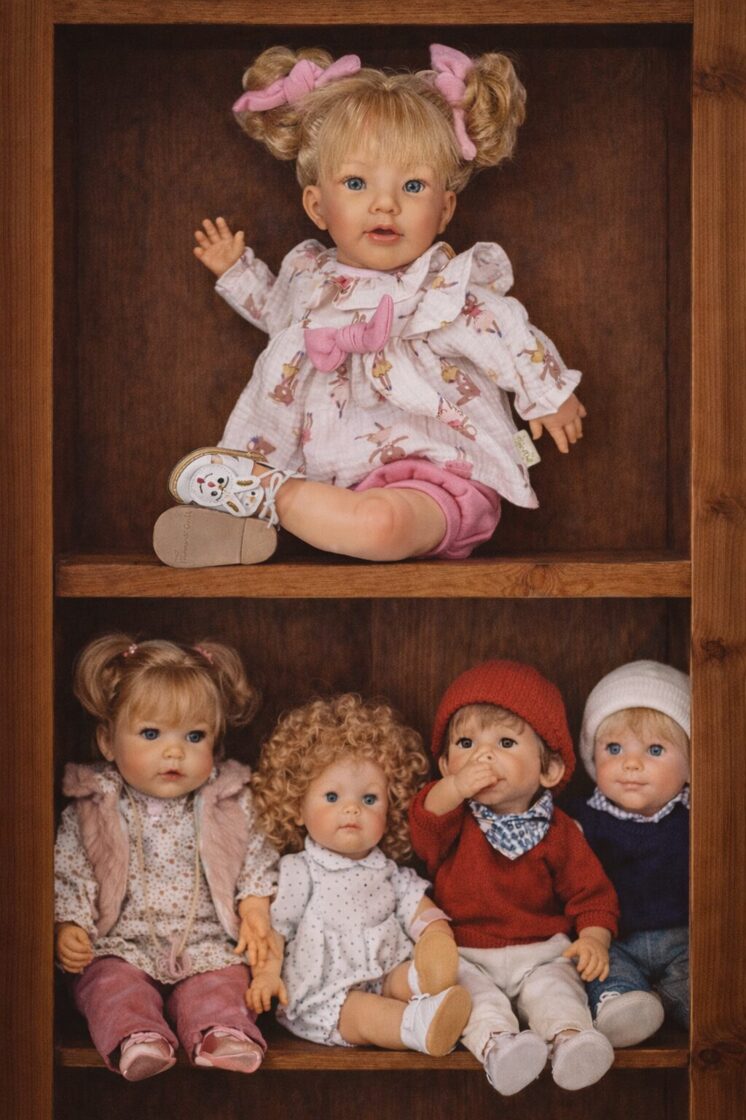
Today the world often teaches us to:
• achieve
• win
• look good
• be productive
But through a doll, a child can learn something else:
to be present.
And presence is what everything else grows from:
love, care, connection, courage…
and sometimes even that moment when an adult says:
“Yes. I can. I will be.”
✨ KidzKiosk recommendation
When choosing a doll or a role-play toy, don’t just think: “Is it the most trendy one?”
Ask instead:
Will it help my child create stories, care, and safety?
Because that’s where the real childhood magic happens. ✨
How to Set Up a Backyard that Keeps Kids Engaged: Creative and Developmental Ideas for an Exciting Summer
Summer is just around the corner, and for kids, that means only one thing – freedom and fun! But for parents, it brings up one important question:
How can we set up the backyard so kids stay active, entertained, and keep learning – all at once?
At kidzkiosk.eu, we offer everything you need to turn your backyard into a world of imagination, movement, and meaningful play.
🚜 1. Sandbox & Metal Excavator – A Kid’s First Construction Site
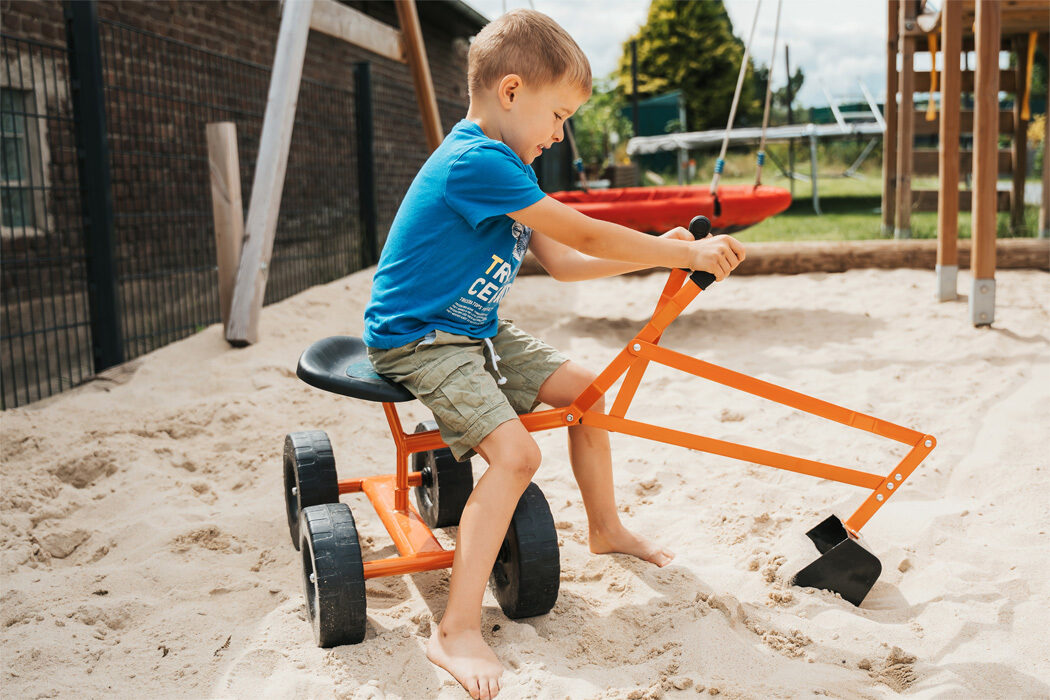
Product: Wooden sandbox with canopy + metal excavator with 360° rotation
Sand is gold for a child’s imagination. With a natural wood sandbox and a real-functioning excavator, your child becomes a builder, inventor, and dreamer – all in one.
Benefits:
-
Develops fine motor skills and hand-eye coordination
-
Encourages problem-solving and open-ended play
👩🏫 Psychologists emphasize that outdoor free play helps children release stress and build focus and emotional regulation.
💧 2. Mud Kitchen – Messy, but Meaningful
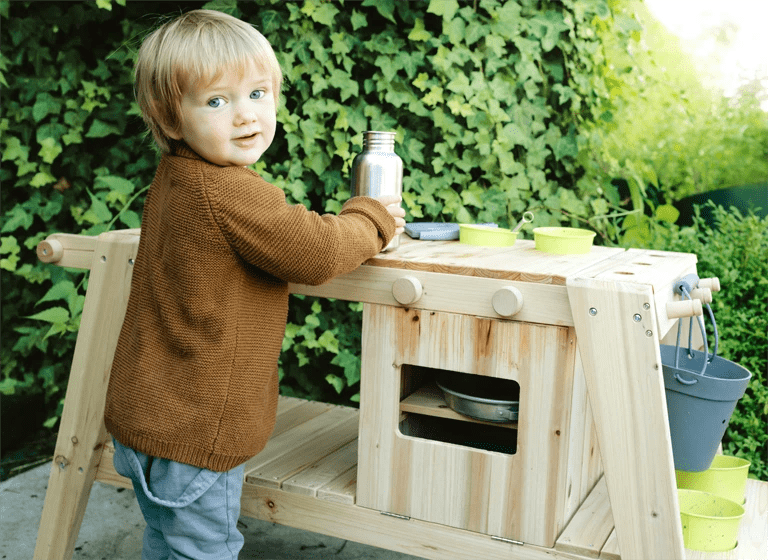
Product: Compact wooden mud kitchen for creative play
A mud kitchen isn’t just a splash zone – it’s a child’s first lab and bakery. Using water, sand, and leaves, kids create “soups”, “cakes”, and more.
Benefits:
-
Sparks imagination, logic, and storytelling
-
Supports sensory development and language growth
🎓 The Reggio Emilia approach highlights the power of the environment as the “third teacher” – especially outdoors, where materials are diverse and open-ended.
⚖️ 3. Balance Domes & Pedal Go-Karts – Moving Smarter

Products: Balance domes + pedal go-kart + balance bikes
Kids learn through movement. Daily physical play is essential for brain and body growth.
Benefits:
-
Balance domes help with posture, coordination, and confidence
-
Pedal go-karts and balance bikes develop gross motor skills and resilience
👣 Research shows that physical activity directly supports attention, memory, and academic success.
🛠️ 4. Gardening Tools – Little Helper in Action
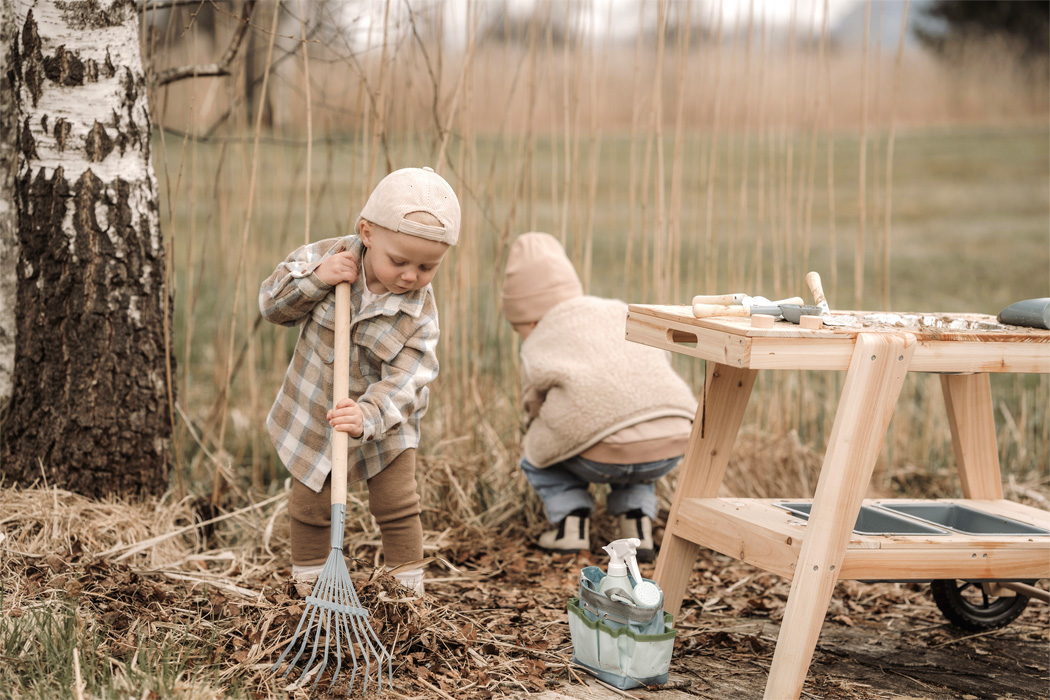
Products: Children’s gardening tool set with tote bag + mini 5-piece tool set
Let your child take part in real-life tasks by working alongside you in the garden.
Benefits:
-
Builds patience, responsibility, and teamwork
-
Encourages fine motor skills and practical knowledge
🌱 Studies show that kids involved in nature-based activities become more emotionally balanced and motivated learners.
🎨 5. DIY Tables & Activity Sets – Arts Outside
Product: Kids' picnic bench with integrated activity table
Whether painting, crafting, or molding with clay, creative outdoor play is powerful.
Benefits:
-
Boosts emotional expression and cognitive flexibility
-
Turns everyday moments into calm, connected family time
🖌️ Creative expression helps kids process experiences, plan actions, and explore ideas safely.
🌈 6. Swings & Garden Chairs – Play Meets Peace
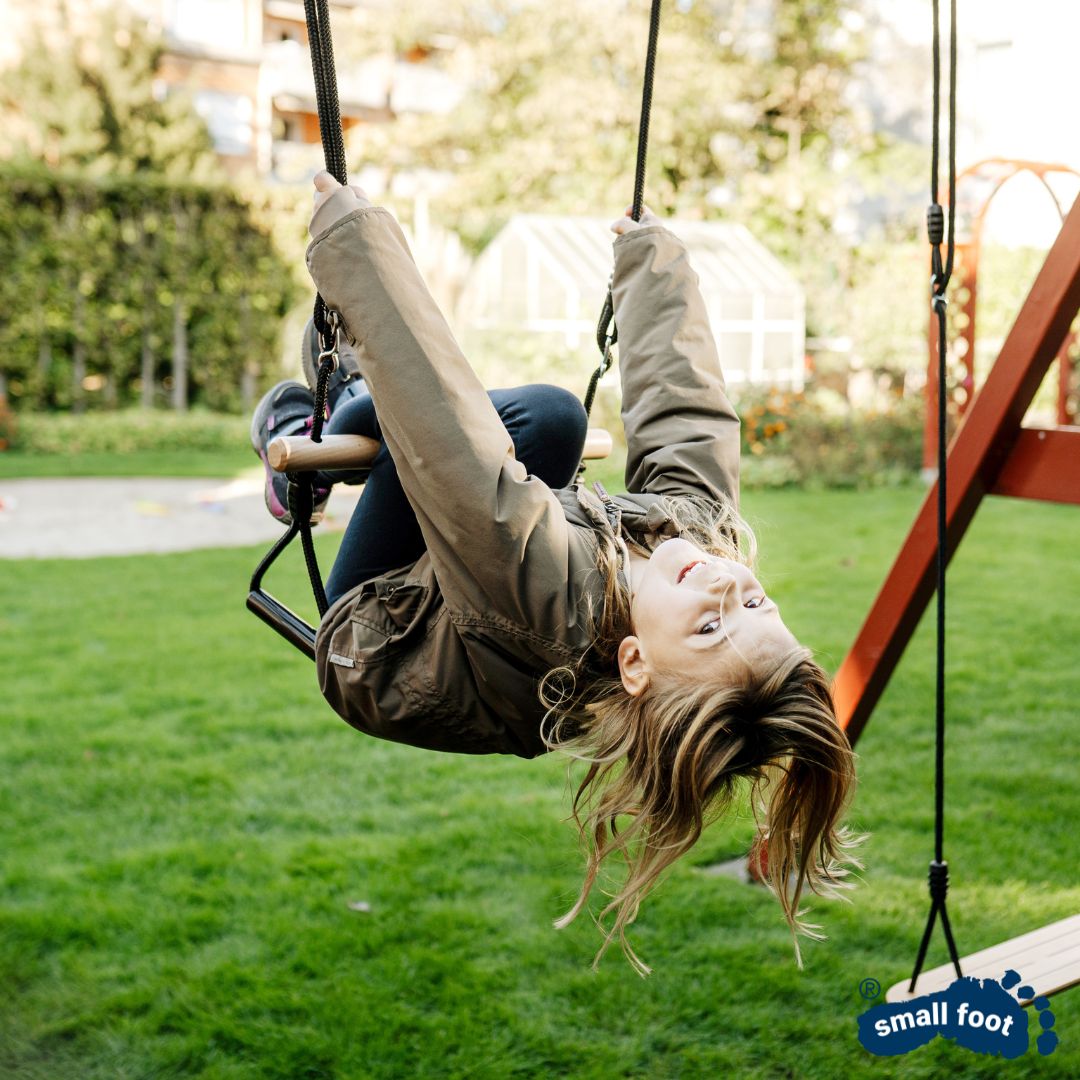
Products: 100cm kids’ swing + adjustable garden chair (natural beechwood)
After active play, rest is just as important. A swing is not just fun – it’s vestibular therapy in disguise.
Benefits:
-
Swings support balance and sensory regulation
-
A comfy garden chair offers a sense of independence
🧘♀️ Motion like swinging calms the nervous system and is vital for reading and writing development.
⚡ 7. Electric Ride-Ons – Speed with Purpose

Products: Electric cars, tractors, quads, motorcycles for kids
Electric ride-ons are more than fun – they teach coordination, direction, and decision-making.
Features:
-
Music, lights, USB or MP3 input
-
Parental remote control for safety
🚗 Not just entertainment – kids learn that choices have consequences:
“If I go faster, I need to pay more attention!”
🎯 Final Thoughts: Turn Your Backyard into a Learning Playground
You don’t need a huge playground. What kids need most is:
-
A mix of creative and active spaces
-
Opportunities to explore and express
-
A place to play near their favorite people – you
With the help of kidzkiosk.eu, creating that space is easy – and fun for everyone.